
The hospitality management services in Oman and the wider GCC is growing rapidly thanks to tourism expansion, mega-projects, business travel, and luxury resort development. To stay competitive, hotels, resorts, serviced apartments, and restaurants increasingly rely on professional hospitality management services to improve guest satisfaction, increase revenue, and streamline operations.
This article explains what hospitality management services include, why they matter in Oman, and how businesses can benefit from outsourcing or partnering with hospitality experts.
What Are Hospitality Management Services?
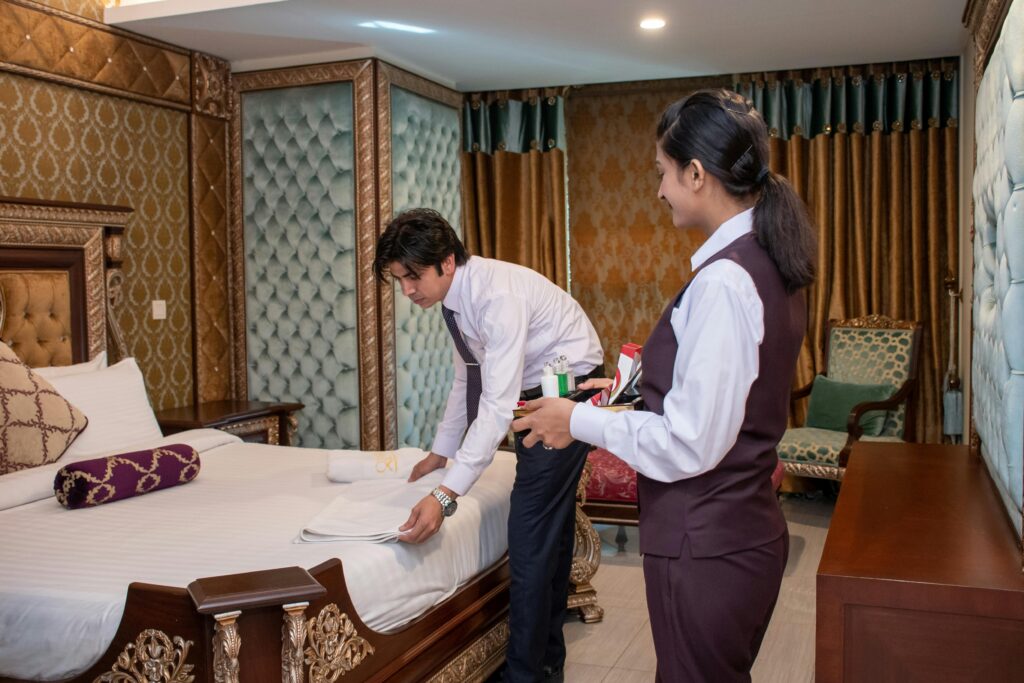
Hospitality management services refer to professional solutions that help hotels, resorts, restaurants, and tourism businesses manage daily operations, enhance guest experiences, and improve profitability.
These services cover everything from hotel operations management to revenue optimization, staff training, marketing, and customer experience strategy.
Core Hospitality Management Services
Typical services include:
Hotel & resort operations management
Revenue management & pricing strategy
Hospitality marketing & branding
Staff recruitment and training
Guest experience & quality assurance
Food & beverage (F&B) consulting
Hotel pre-opening services
Hospitality technology integration
Why Hospitality Management Services Are Growing in Oman

Oman’s tourism sector is expanding under Vision 2040, creating strong demand for professional hotel management support.
Key Growth Drivers
- Tourism diversification
Luxury resorts
Eco-tourism projects
Cultural tourism
Business travel and MICE events
- Rising competition
Hotels must compete on:
Guest experience
Online reputation
Pricing strategy
Service quality
- Digital transformation
Modern travelers expect:
Online booking convenience
Personalized service
Seamless digital experiences
Professional hospitality consultants help businesses adapt quickly to these changes.
Hospitality management services play a vital role in ensuring the smooth operation and success of hotels and resorts, especially in competitive destinations such as Oman. The industry is built on delivering exceptional guest experiences while maintaining high standards of efficiency, organization, and professionalism. Effective hospitality management focuses on coordinating all aspects of hotel operations, including front desk services, housekeeping, food and beverage management, guest relations, and facility maintenance.
One of the key components of hospitality management is guest satisfaction. Hotels and resorts must prioritize creating a welcoming and comfortable environment for all guests. This includes providing prompt service, personalized attention, and quick resolution of any issues that may arise during a guest’s stay. A positive guest experience not only encourages repeat visits but also strengthens the reputation of the establishment through word-of-mouth and online reviews.
Another important aspect is operational efficiency. Hospitality managers are responsible for ensuring that all departments work together seamlessly. This requires effective communication, proper staff training, and strong leadership skills. When operations are well-coordinated, it reduces delays, improves service quality, and enhances overall productivity within the organization.
In addition, staff development and training are essential in maintaining high service standards. Employees should be regularly trained on customer service skills, safety procedures, and industry best practices. Well-trained staff are more confident, efficient, and capable of delivering consistent service that meets guest expectations. This also helps reduce errors and improves the overall guest experience.
Technology also plays a growing role in modern hospitality management services. Many hotels and resorts now use digital systems for booking, check-in, customer relationship management, and housekeeping coordination. These technologies help streamline operations, reduce manual errors, and improve communication between departments. As the hospitality industry continues to evolve, adopting modern tools is essential for staying competitive.
Financial management is another critical area in hospitality operations. Managers must carefully monitor budgets, control costs, and ensure profitability without compromising service quality. Effective financial planning allows hotels and resorts to invest in improvements, upgrade facilities, and maintain high standards while remaining financially sustainable.
Marketing and branding also contribute significantly to success in the hospitality industry. A strong brand presence helps attract more guests and build trust in the market. Hotels and resorts in Oman, in particular, benefit from promoting their unique cultural experiences, luxury services, and hospitality traditions to attract both local and international visitors.
Overall, hospitality management services are essential for delivering high-quality experiences in hotels and resorts. By focusing on guest satisfaction, operational efficiency, staff training, technology, financial control, and strong branding, hospitality businesses can achieve long-term success and maintain a competitive edge in the industry.
